Q1 of 2020 is almost coming to an end. In the midst of the World Health Organization (WHO) declaring the Covid-19 as a pandemic, tech giants around the world have started to cancel all its upcoming event. Part of it is Apple also has officially made an announcement today saying that it upcoming Worldwide Developer Conference will continue as planned.
However, the WWDC 2020 event will be a completely digital-only event. This means Apple wouldn’t be having any sort of physical gathering at San Jose, California on June 2020. Apple is taking this initiative due to the widespread of Covid-19 all around the world. Besides that, there are many cases also at the area of San Jose in California which causes Apple to cancel its physical WWDC 2020 event.
All this time, we from TechmonQuay have been watching the WWDC event live from Malaysia. It has been normal for us. But that’s only the keynote event. The question is how about the hand-on event. Looks like Apple is planning for its online WWDC 2020 a packed with a content event for both consumers, press media and developers.
Apart from that, Apple also has announced that it will be donating $1 million to the local San Jose organization to offset the revenue loss during the WWDC 2020 in June. That’s a great move Apple. According to Apple’s senior vice president of Software Engineering, Craig Federighi, Apple has been preparing a new interactive way to interact with the engineers. We are guessing this could be almost like a programming Bootcamp.
In conclusion, we are looking forward to the Apple WWDC 2020 digital-event. Currently, Apple didn’t reveal the exact date yet on WWDC event details. We will reveal more details once Apple reveals the official date of the WWDC 2020. As of, for now, both Facebook and Google have to cancel its F8 and Google I/O developer conference too due to the Covid-19 outbreak.
So stay safe guys, try not to go out frequently especially to crowded places. If you insist to go then wear a mask and make sure to carry a sanitizer with you.
We already know that Touch ‘n Go has stopped offering its free RFID sticker after announcing it on February 2020. As part of the announcement, Touch ‘n Go also confirms that the RFID sticker will be priced at RM35. Now, TNG is ready to roll out the RFID feature for all PLUS highways.
According to TNG, it will roll out the RFID feature starting on 1st April 2020. Currently, the RFID feature is already available at 10 open-tolls only. Starting next month, you can start to use the RFID feature if you are crossing in any of the 83 toll plazas on PLUS highway. According to PLUS, it will support 173 RFID lanes which 131 lanes are only for RFID and the remaining will be both SmartTAG and RFID.
Have you got your car fixed with the RFID sticker? There is still time for you to get it for RM35 at any of the RFID fitment centres. Later this year, Touch ‘n Go will also be offering a way to deduct your toll payments directly from your TNG eWallet app. With this feature implemented, you can simply connect your credit card or debit card to your TNG eWallet account and it will deduct automatically. You wouldn’t have to worry about reloading your TNG card anymore. You can still get the RFID sticker from the below highways.
Sungai Buloh Overhead Bridge Restaurant (Both bounds)
You might be wondering, can you enter into the highways through the RFID lane and then exit with the other lane. Sorry to tell you, that will not work in this case. PLUS will be charging you a Long Journey Time penalty if you did not exit through the RFID lane. So make sure your entry and exit on the right lane.
In conclusion, we are hoping the daily massive jams can be reduced during school holidays with the RFID feature. The RFID sticker is now available at RM35 only.
Apple Watch has truly revolutionized how a smartwatch should be. Looking forward now, 90% of the smartwatches are following the benchmark Apple set. On March 6 2020, the China smartphone company unveils its most awaited flagship phone, Oppo Find X2 Pro. On the same day itself, Oppo also unveils its first-ever smartwatch called Oppo Watch.
The Oppo Watch comes in three models which are the stainless steel version, the 46mm and 41mm aluminium case version. All these three models feature a 3D flexible hyperboloid display which is the industry-first display for a smartwatch. The icons and the fonts are bold and sharper with the AMOLED Retina display. With this hyperboloid display, the Oppo Watch has a 72.76% of screen-to-body ratio with a 402 x 476 resolution.
On the feature-wise, the Oppo Watch connects you forever with its built-in cellular feature. Similar to the Apple Watch Series 5, the Oppo Watch supports eSIM. This means you can continuously stay connected even without having your Oppo smartphone with you. Besides that, the Oppo Watch also features various types of the watch face. It comes with the style-matching AI which can generate the watch face based on your outfit colour.
For the health-wise, the Oppo Watch does a pretty decent job in monitoring your health. Apart from tracking your heart rate, the Oppo Watch can also monitor your sleep quality. It will generate a sleep report which will show the duration of a deep sleep, light sleep and awake time. For the female, Oppo has also included the cycle tracking app for all female users. The Oppo Watch also has its own breathing reminder app built-in. Even Apple also has the Breathe app built-in on its smartwatch.
Under the hood, the Oppo Watch also features a Dual-Chip Endurance System which can switch between Snapdragon and Apollo chip. This switching activity is done based on the current power usage mode. Most probably, the Snapdragon chip will be used when the watch is normal power mode and then it switches to Apollo chip during low power mode. According to Oppo, it claims that the Oppo Watch can last up to 40 hours in a single charge with its Smart Mode. Unless if you enable the Power Save Mode, then the watch can last up to 21 days on a single charge.
Whenever it comes to Oppo, it is always well-known for its flash charging technology. That’s the same technology Oppo has integrated for the Oppo Watch. Now the Oppo Watch features the Watch VOOC Flash Charging technology. It can fully charge your watch within 75 minutes only. If you charge for 15 minutes you can use the Oppo Watch for 18 hours at least. That is almost enough for the entire day of use.
Pricing and Availability
The OPPO Watch Series will be available globally and will hit the shelves in mainland China from March 24. The currently unveiled versions use the Android-based ColorOS Watch system. It will soon come in versions tailored to other markets, so please stay tuned. The 41mm model is priced at CNY1,499 (RM913) whereas the 46mm model is priced at CNY1,999 (RM1,218).
As OPPO’s first foray into the wearable market, OPPO Watch is raising the bar with its signature design, built-in cellular connectivity, health & fitness features, fast charging, and Dual-Chip Endurance System. Overall, it’s a smartwatch experience you won’t want to miss.
It has been one month since Touch ‘n Go made the official announcement to roll out its RFID feature nationwide. Since then, TNG has started to charge for the fitment RM35. During the announcement, it also announces a few fitment centres, especially in KL. Now, Touch ‘n Go has announced that it will be opening more fitment centres in Penang, Johor and Perak.
Apart from the current fitment centres in the list, Touch ‘n Go has opened another 18 new fitment centres in Penang, Johor and Perak. If you have missed out the free RFID tag fitting, now you need to pay RM35 for the RFID sticker. Do note that, in a few states the RFID fitment centres are extended up to end of March 2020 only.
In conclusion, if you don’t want to miss this opportunity, make your move now by finding the nearest fitment centre.
Oppo finally unveils its most awaited flagship device, the Oppo Find X2 Pro. Back in 2018, Oppo unveils the first Oppo Find X. The Oppo Find X has totally changed the way Oppo phones were a few years ago. With the new Oppo Find X2 Pro, Oppo has taken a huge leap forward.
First of all, let’s take a look at the display of the Find X2 Pro. Upfront the Find X2 Pro features a 6.7″ punch-hole curved OLED display with the resolution of 3168 x 1440 pixels. The best part of it is the Find X2 Pro has a 120Hz of refresh rate. It has to be noted that there are very few smartphones out there currently which supports 120Hz refresh rate. It’s great to know that Oppo is one of the smartphones manufacturers on the list. For security-wise, the Oppo Find X2 Pro comes with the optical in-display fingerprint scanner.
At the camera section, the Find X2 Pro features a triple camera setup. First is the 48MP wide-angle camera which uses the Sony IMX689 sensor and another 48MP ultra-wide-angle camera. Apart from that, there is also a 13MP periscope telephoto camera. In order to take some great selfie shots, there is also a 32MP selfie camera. Using the selfie camera you can also capture HD night selfie camera.
Powering the Find X2 Pro is the Qualcomm Snapdragon 865 processor which comes with the 5G support. The Snapdragon 865 also supports 12GB of RAM and 512GB of internal storage. Under the hood, there is a huge 4,260mAh battery which supports Oppo’s SuperVOOC 2.0 fast charging technology. With this charging technology, you can fully charge the Find X2 Pro for just 38 minutes. However, there is no wireless charging capability on this device.
Pricing and Availability
For the pricing wise, the Find X2 Pro is officially priced at €1,199 (RM5,644) in Europe. The Find X2 Pro is available in either two colours which are black ceramic or orange vegan leather. Honestly, we really like the orange vegan leather colour. It gives you the premium feel when you hold it on your palm.
The Find X2 Pro will soon be available in Malaysia on March 14 onwards. You can find out more information on the Oppo Find X2 Pro from the Oppo website.
It’s been almost a year since we got to know that WhatsApp is working on its Dark Mode feature. Surprisingly, WhatsApp reveals its Dark Mode feature today globally for both iOS and Android devices. Back in January 2020, WABetaInfo confirms that WhatsApp rolls out this feature to its beta release.
I am sure if you have followed our website consistently, then probably you might already notice, before WhatsApp, other apps have integrated the Dark Mode feature. Nowadays, even mobile OSes such as iOS and Android supports system-wide dark mode feature. It’s really great to see finally WhatsApp is in the bucket of Dark Mode.
WhatsApp is the messaging platform which is used by hundreds of active users daily. With the current WhatsApp, you might not be able to message your close friends or your partners as its too bright. There is no privacy especially if you are in the public. Additionally to that, it also strains your eyes during the night too.
Why Dark Mode?
According to WhatsApp from its blog, says that the Dark Mode feature is designed to in a way to reduce eys strains in low light environments. Besides that, it is also designed to prevent your phone lighting up all of a sudden in the darkroom. I am sure none of you likes it, especially if you receive WhatsApp messages while you are in the room at night. Now, you can worry less with the Dark Mode feature for WhatsApp.
WhatsApp also added that the team has spent numberless time in researching and experimenting the Dark Mode feature. It has taken two things into consideration which are Readability and Information Hierarchy. For the readability wise, WhatsApp chooses the colours which can minimise the eye fatigue. The colours also are chosen based on the system default colours for both iOS and Android devices. In order to make the information stands out, the team also uses colours and design elements which allows the user to focus on each screen.
For the availability wise, the WhatsApp Dark Mode feature is now available to update in both iOS and Android devices. If you are using devices with either iOS 13 or Android 10 then the dark mode will be enabled automatically if your system-wide dark mode is enabled. If you are using different Android versions, then probably you can enable this feature from the WhatsApp settings itself. Just go to the WhatsApp Settings -> Chats -> Theme and then select “Dark”.
In conclusion, this is the most awaited feature of the year 2020. The Dark Mode feature is also available in Malaysia now. I can’t wait to get my hands on this feature soon. Check out our TechmonQuay Twitter page for more updates.
Effective 20 February 2020, Vivo Malaysia together with Digi will be offering an exciting promotion for all Digi’s users. With this collaboration, the public who subscribe to Digi Postpaid 58 plan will be able to purchase Vivo Y15S (worth RM799) at only RM299! Additionally, the plan is also inclusive of unlimited calls and 10GB Internet with a monthly subscription of RM58.
The highly advanced Vivo Y15S is embedded with 4GB RAM and 128GB ROM. The phone comes with a 6.35-inch touchscreen HD display powered by a Mediatek Helio P35 processor with a huge 5,000mAh battery.
Fitted with the triple-lens camera, 13MP + 8MP + 2MP in the rear and an 8MP selfie camera at the front, the Y15S also packs a punch with Accelerometer, Virtual Gyroscope, Proximity Sensor, Ambient Light sensors, E-Compass and Fingerprint Sensor. Running on the FunTouch OS 9.0 based on Android 9.0, the Y15S is a dual-SIM smartphone with connectivity options such as Wi-Fi, GPS, Bluetooth 5.0, USB 2.0, FM radio, 3G and 4G.
Vivo Y15S is now available in its elegance colour, Phantom Black and Burgundy Red.
For more information, head over to Digi’s website and Vivo Facebook page.
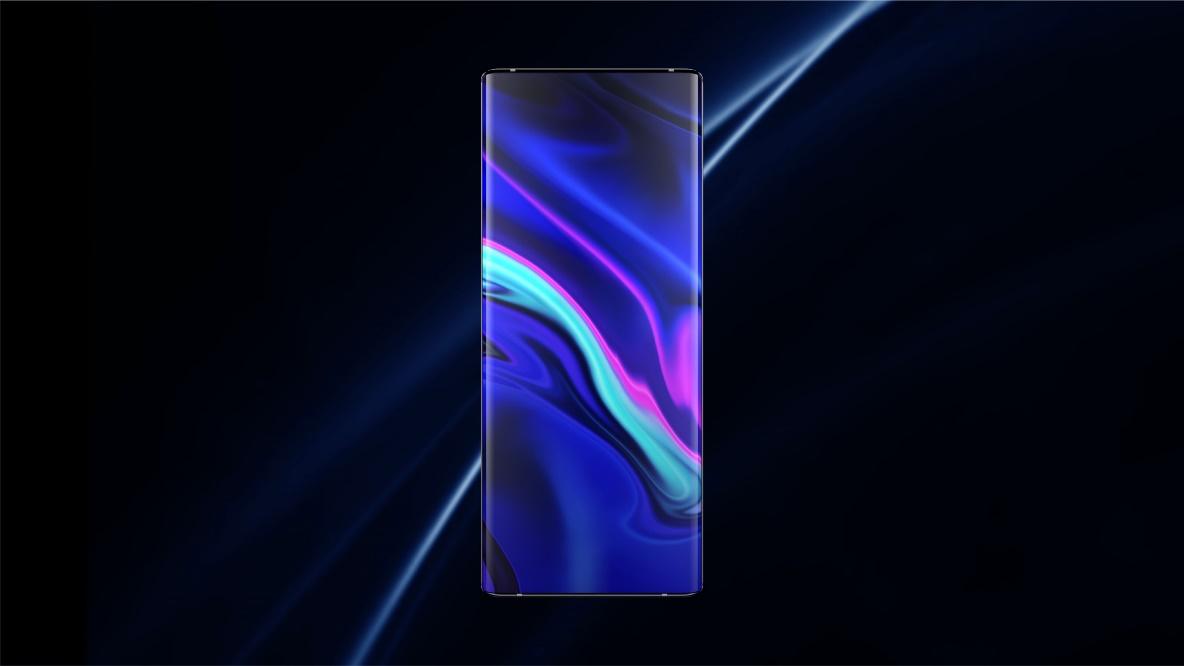
vivo today unveils the third generation of its APEX concept smartphone – APEX 2020. Known for iconic innovation, APEX 2020 builds on the success of its previous generations to feature more cutting-edge technologies, while also showcases vivo’s continuing pursuit of head-turning aesthetics. This flagship product displays a major breakthrough in visual effects that is based on vivo’s deep consumer and smartphone industry insight. APEX 2020 is truly a revolutionary manifestation of vivo’s exploration of future smartphone design.
APEX 2020 has a 120° FullView Edgeless Display that removes side edges and bezels from the front view. With the In-Display Camera and vivo Wireless Super FlashCharge 60W, APEX 2020 has a Super Unibody Design with no openings. vivo also successfully embeds a gimbal-like structure into APEX 2020’s main camera, which is equipped with a 5x-7.5x Continuous Optical Zoom. This feature showcases vivo’s latest achievements and future plans to offer extraordinary visual effects and enhanced future photography.
Harry Hong, General Manager of Product, vivo said, “APEX is never a mere ‘concept’ or a glimpse of ‘imagination’. It’s a creation that goes beyond any previous experience brought by mobile technology. Through APEX 2020, we are proud to see vivo’s vision come to life as a technology company that continues to push the boundaries of mobile technology and explore what lies beyond the ordinary. It also showcases our ambition to achieve our aspirations step-by-step. vivo will continue to put APEX’s innovative technologies into practice, allowing more consumers to be empowered by such technology.”
120° FullView Edgeless Display, Pushing the Boundaries Further
The APEX 2020 has carried on vivo’s exploration and pursuit of a truly FullView Display and Super Unibody design. It is wrapped in a 6.45-inch curved display that bends at an angle of up to 120° on both sides. This helps remove side edges and bezels from the front view and results in an ultra-bezel-less display.
For both aesthetic and practical considerations, physical buttons are replaced by a virtual pressure-sensing button. APEX 2020 is another perfect fusion of visual effect, natural touch and human-device interaction.
In-Display Camera, Visualizing the Invisible
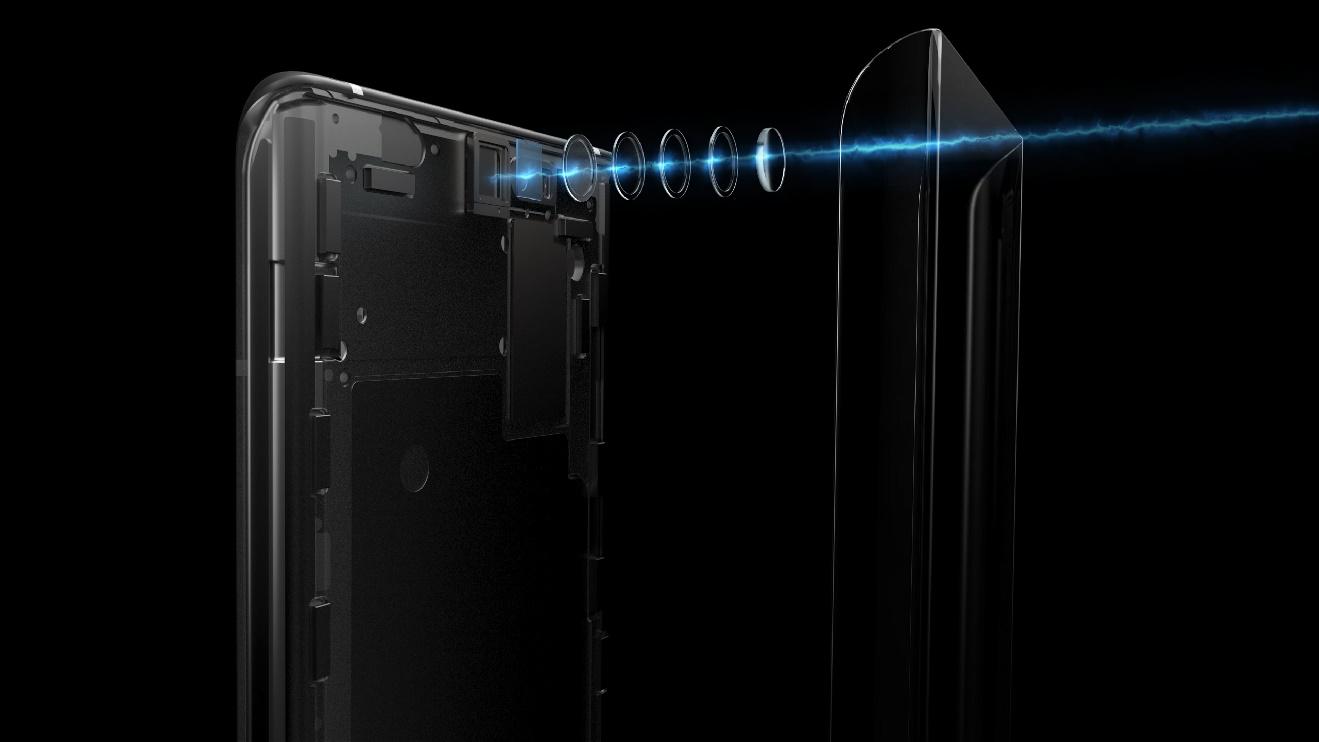
The In-Display Camera of APEX 2020 unleashes the new possibility of a non-mechanical front camera. The “invisible” front camera presents a Super Unibody design with no openings and expands the internal space.
Through innovation in screen pixel layout and circuit design, APEX 2020 has successfully increased the light transmittance of the screen right above the front camera to 6 times of the other part of the screen, and effectively reduces optical interference, diffraction and stray flashes through a series of algorithm optimizations to increase the photography quality. The final image quality is also enhanced through a series of algorithm optimizations. The 16MP front camera features a 4-in-1 super-pixel photosensitive chip, realizing the innovation of capturing clear images with the In-Display Camera.
5x-7.5x Continuous Optical Zoom – High Resolution + High Image Quality, Recording A Clearer World
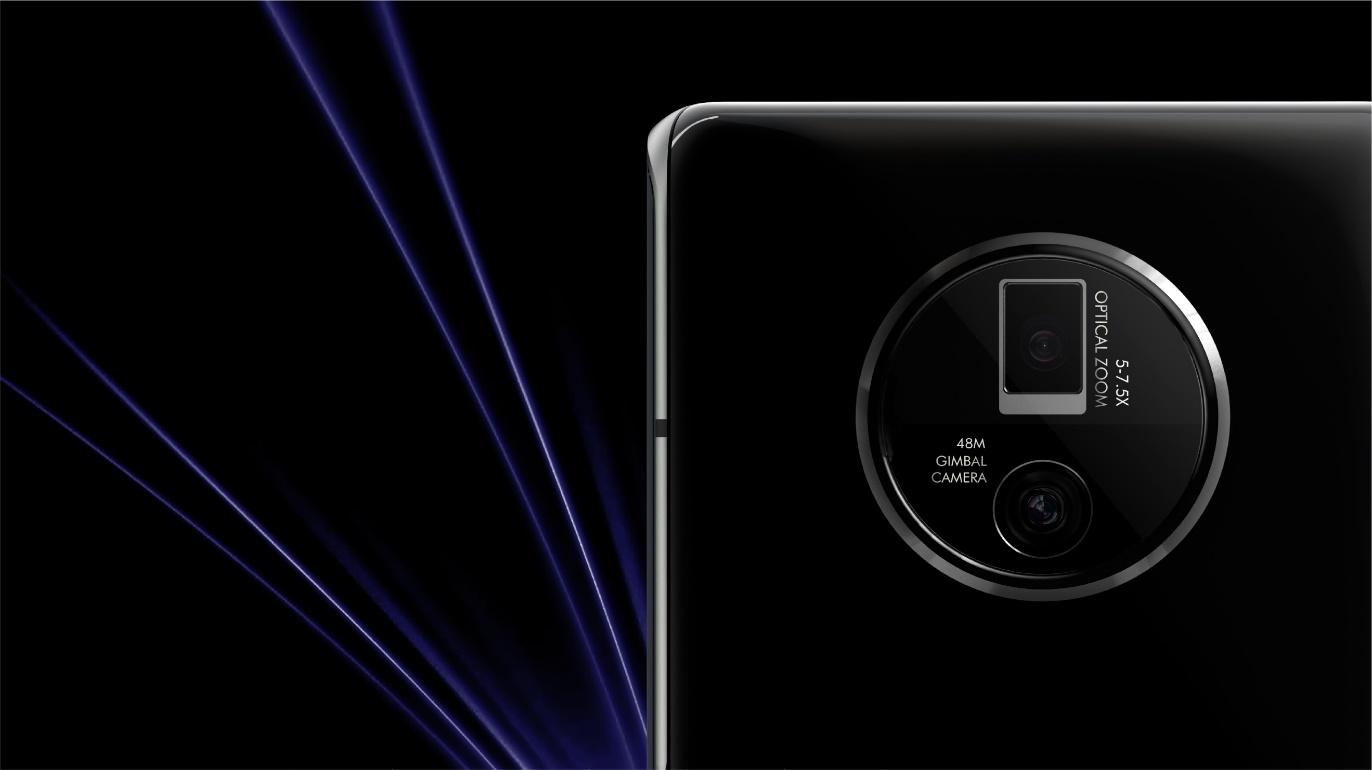
Currently, almost all high magnification zooms solutions in the industry depend on hybrid zoom. As different fixed magnifications need to be integrated with digital algorithms for output, there is a level of compromise in resolution and image quality. APEX 2020 comes with Continuous Optical Zoom, becoming the world’s first smartphone equipped with high-magnification continuous zoom. It can achieve continuous optical zoom under high magnifications between 5x-7.5x and produce images in high resolution and quality rather than filling focal lengths through digital magnification. It enables users to preserve the clarity of all moments by effectively enhancing every detail.
APEX 2020 is equipped with a “4-group lens combination” with two groups fixed and two groups movable, which achieves high-magnification continuous zoom and real-time focus at one time. With the support of a periscope structure, the entire module is only 6.2 mm thick, therefore, making it possible for this professional-grade lens to be incorporated into the APEX’s ultra-thin body. To further enhance the image quality, vivo has incorporated a leading multi-frame algorithm so that scenery from afar can also be easily captured.
Gimbal-Stabilizing Main Camera – Stable Mechanical Structure and Enhanced Night Photography
With the arrival of 5G, creating smartphone video content becomes an even bigger priority. In order to fulfill users’ demand to record daily life anywhere, anytime, vivo successfully embeds a gimbal-like structure into APEX 2020’s main camera after a long-term technical development and multiple experiments. It achieves optical stabilization in the front-back and left-right inclined directions with enhanced performance. Lab tests demonstrate that compared to the traditional OIS system, its stabilization angle is 200% extended. In addition, the image integrity is preserved to a greater extent.
This feature greatly reduces the blurring caused by a shaky hand. Users can also enjoy videography with smoothness. There is no need to bring other equipment as this handset is readily available for you to capture all those wonderful moments. Stable handheld shooting can also effectively extend the exposure time so that APEX 2020 also has a stronger capacity for night photography.
Vivo Wireless Super FlashCharge 60W, Challenging the Boundaries
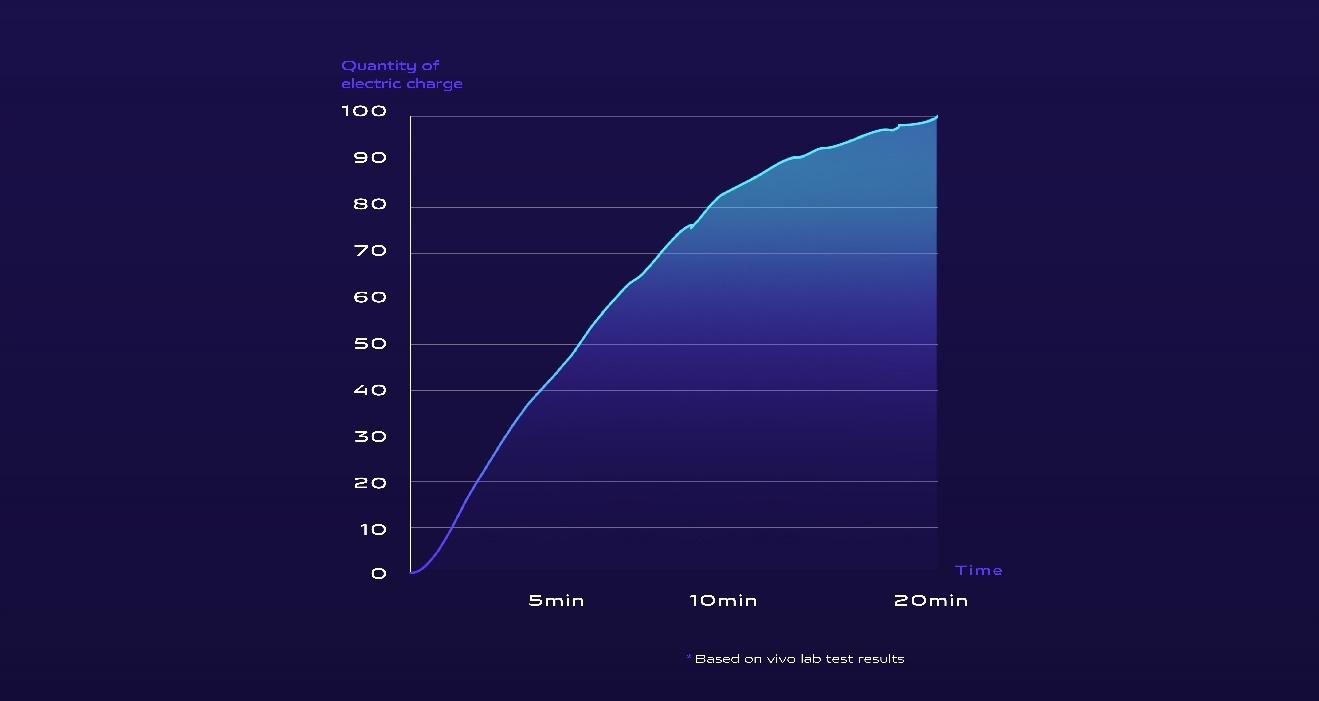
The APEX 2020 features the revolutionary vivo Wireless Super FlashCharge 60W, which recharges a handset with a 2000mAh battery in only 20 minutes, offering a faster charging experience than conventional wired flash charging.
Other than that, APEX 2020 is also equipped with innovations such as the 3rd Generation Screen SoundCasting Technology, Instant Photobomb Removal and Voice Tracking Auto-Focus. APEX 2020 brings an all-rounded user experience and endless surprises to the smartphone industry and global users.
Despite the Mobile World Congress being cancelled, Honor insists to continue its launch event in Barcelona. Apart from Honor, Huawei and Vivo also will be there to reveal their new lineups of products. Honor has unveiled its new products which include the new Magic Earbuds.
The first time, when we saw Honor unveils the Magic Earbuds, the first thing strike to our mind was, is this the AirPods Pro clone? One of the reasons we say so is because of the design which is in the combination of the Airpods and AirPods Pro. The stem looks like the AirPods and the ear tip looks like AirPods Pro.
A perfect clone of AirPods Pro
Besides that, the new AirPods Pro clone also comes with a hybrid active noise cancellation feature. However, we are not sure whether does the Magic Earbuds have a similar force sensor to turn on or off the active noise cancellation feature. But from the launch event, it looks like the active noise cancellation is always on.
For music lovers, surely they can enjoy listening using the Magic Earbuds because of the 10mm driver unit for the speakers. This means you can enjoy listening to songs with high-quality bass. There are also three microphones in the Magic Earbuds which is used to provide clearer voice clarity.
For the battery wise, the Magic Earbuds charges via the USB-C. You can fully charge the earbuds for 1.5 hours which allows you to listen to songs continuously for at least 3.5 hours. It also comes with the charging case which can provide a total of 13 hours of music playback.
Overall the Magic Earbuds comes in two colours, Pearl White and Robin Egg Blue. Currently, the Honor Magic Earbuds are priced at EUR129 (RM600). According to Honor, the Magic Earbuds will start to be available elsewhere in April 2020.
During a virtual press conference themed “TOGETHER, Connecting Possibilities,” Huawei Consumer Business Group (BG) launched the HUAWEI Mate Xs, the next evolution of the revolutionary HUAWEI Mate X foldable handset. Packed full of Huawei’s newest technology, the HUAWEI Mate Xs is considered Huawei’s most high-end device featuring the Kirin 990 5G SoC and an improved Falcon Wing Design, delivering powerful performance and seamless user experience across smartphone and tablet modes.
Unfold limitless possibilities
The HUAWEI Mate Xs delivers a true FullView experience with an 8-inch outwards-folding display enabled by the new mechanical hinge design. First deployed on the HUAWEI Mate X, the Falcon Wing design features more than 100 interlocking parts working in perfect harmony to reinforce the display while delivering a seamless user experience across the two modes.
Made with a zirconium-based liquid metal, the upgraded hinge is much more durable, facilitating a satisfying full 180-degree fold.
The HUAWEI Mate Xs is equipped with a flexible display featuring an innovative two-layer polymer structure. The foldable display is manufactured using a Huawei-pioneered technique adhering two layers of aerospace-grade polyimide with an optically clear adhesive. This unique material allows the display to produce great image quality, colour saturation and brightness while retaining a high degree of durability.
Folded, the HUAWEI Mate Xs is a powerful dual-screen smartphone featuring a 6.6-inch main screen and a 6.38-inch secondary screen. Unfolded, the smartphone becomes an 8-inch tablet that delivers a viewing experience across a myriad of work and play scenarios unrivalled by that of any other smartphone.
The HUAWEI Mate Xs includes a Flying Fish Fin Cooling System that is designed for the foldable form factor. This unique cooling system utilises flexible graphene with microscopic crevices that allow it to fold along with the device and cover the full surface area for even, effective cooling.
Designed especially for the HUAWEI Mate Xs’ slim form factor, the bespoke 5G antenna system exemplifies Huawei’s expertise in telecommunications technology. A result of a lengthy R&D process, the antenna design ensures high speed, stable connectivity on the HUAWEI Mate Xs.
Leading performance and 5G connectivity
Powered by the Kirin 990 5G, the HUAWEI Mate Xs benefits from the full force of Huawei’s most advanced chipset. The SoC includes an octa-core CPU comprising two super-sized custom Cortex-A76 cores, two large custom Cortex-A76 cores and four small Cortex-A55 cores, running at a base clock of 2.86GHz.
Graphics processing is handled by the 16-core Mali-G76 GPU, the most powerful GPU on Huawei handsets, while AI demands are supported by an NPU built on Huawei’s Da Vinci architecture.
The Kirin 990 5G SoC includes an integrated 5G modem, allowing it to simultaneously deliver powerful performance and 5G connectivity with better efficiency and lower heat output. It supports 2G, 3G, 4G, as well as 5G NSA and SA. The SoC supports the full 5G spectrum and 5G+4G Dual SIM Dual Standby, ensuring care-free travels.
Continuing Huawei’s heritage of curating best in class camera systems, the HUAWEI Mate Xs is bestowed with a true flagship camera system. Arranged into a vertical array along the sidebar, the SuperSensing Leica Quad Camera system features a 40MP main camera (wide-angle, f/1.8), 16MP ultra-wide angle camera (f/2.2), 8MP telephoto camera (f/2.4, OIS) and 3D Depth Sensing Camera. The camera system supports a combination of OIS and AI Image Stabilisation for super steady shots and up to 30X hybrid zoom. As an all-scenario camera system, it also supports up to ISO 204800 for capturing incredible photos in low light environments.
The HUAWEI Mate Xs revolutionises the selfie category, allowing the user to take full advantage of the quad-camera system that would traditionally only benefit images shot from the rear of a device. However, by simply reversing the HUAWEI Mate Xs, consumers can use the secondary screen for selfie shots. Furthermore, taking portraits is even more interactive, allowing the subject and photographer to work in unison to develop beautifully styled and captured shots.
Multi-tasking re-invented
The HUAWEI Mate Xs has the ability to transform into a much larger digital canvas thanks to the fold being secured by a physical clasp that can be unfastened at will with an accessible button on the sidebar. This offers more space for users to customise the experience to suit their needs.
The foldable phone natively supports Multi-Window which allows for two apps to be displayed side by side and interact with each other. Text, images and documents can be transferred as easily as dragging and dropping the content from one app to the other.
A dock located at the bottom of the screen provides a space for users to assign apps for quick launch. When two apps are open concurrently, users may launch a third app using the Floating Window feature, which can be used to take care of small tasks such as responding to text messages without exiting the current apps.
The HUAWEI Mate Xs runs on EMUI10.0.1, an Android Open Source Project-based operating system. It not only combines enhanced performance with improved security but also supports the Multi-screen Collaboration feature, which is developed with Huawei’s distributed technology at its foundation. This feature breaks down the boundaries between Windows and Android devices. With this revolutionary multi-device feature, users can easily transfer files between the HUAWEI Mate Xs and a HUAWEI MateBook, as well as control two systems from a single display.
The HUAWEI Mate Xs will be available with an MSRP of €2,499 (RM11k).